Bolt Torquing and Joint Integrity Management: Essential Guide for UAE Industrial Facilities
By BIJER Technical Team | Updated January 2026
A single loose bolt on a high-pressure flange. That’s all it takes.
One undertorqued fastener can trigger a hydrocarbon leak that shuts down an entire Abu Dhabi refinery for days—costing millions in lost production, emergency response, and regulatory scrutiny. Yet in thousands of industrial facilities across the UAE, inadequate bolting practices remain one of the most common—and most preventable—causes of unplanned downtime.
If you manage piping systems, oversee turnarounds, or coordinate maintenance in oil & gas facilities, understanding proper bolt torquing isn’t just about following procedures. It’s about protecting assets, personnel, and your operation’s reliability.
Here’s what facility managers across Abu Dhabi need to know about achieving and maintaining flange joint integrity.
Why Proper Bolt Torquing Prevents Costly Shutdowns (And Safety Incidents)
Think of bolted flanges as the pressure boundary’s weakest link—not because they’re poorly designed, but because they depend entirely on human execution.
Every flanged connection in your facility creates a sealed joint through controlled compression: bolts stretch, gaskets compress, and if everything aligns correctly, the assembly contains whatever’s flowing through the pipe. But this only works when bolt loads are uniform, adequate, and maintained throughout the joint’s service life.
The Real Cost of Flange Failures
When bolted joints fail, the consequences cascade quickly:
Unplanned shutdowns: A leaking flange on a critical process line forces emergency isolation. Production stops. Revenue vanishes. Your team scrambles to mobilize contractors and secure permits for repairs.
Safety incidents: Hydrocarbon releases in classified areas create immediate fire and explosion risks. Even “small” leaks expose personnel to toxic substances and trigger emergency response protocols.
Environmental penalties: Emissions from leaking flanges violate UAE environmental regulations. Regulatory agencies don’t distinguish between major ruptures and minor seeps—both trigger compliance actions.
Equipment damage: Leaking fluids corrode adjacent piping, supports, and instrumentation. What starts as a gasket issue becomes a much larger repair scope.
The frustrating reality? Most flange failures stem from improper bolting during assembly or maintenance—issues entirely within your control.
Manual vs. Hydraulic vs. Pneumatic Torquing: When to Use Each Method
Not all bolting jobs require the same approach. Choosing the right method depends on bolt size, access constraints, precision requirements, and the joint’s criticality.
Manual Torquing: Up to 500 ft-lbs
For smaller flanges (up to 2″ NPS in most pressure classes), calibrated manual torque wrenches provide adequate control.
Best for:
- Low-pressure utility connections
- Instrument piping and small process lines
- Locations where hydraulic equipment won’t fit
- Routine maintenance with straightforward access
Limitations: Above 500 ft-lbs, manual methods become physically impractical and introduce significant variability. Operator fatigue degrades accuracy, and achieving uniform bolt loads across large-diameter flanges becomes nearly impossible.
Hydraulic Torquing: 500 to 30,000+ ft-lbs
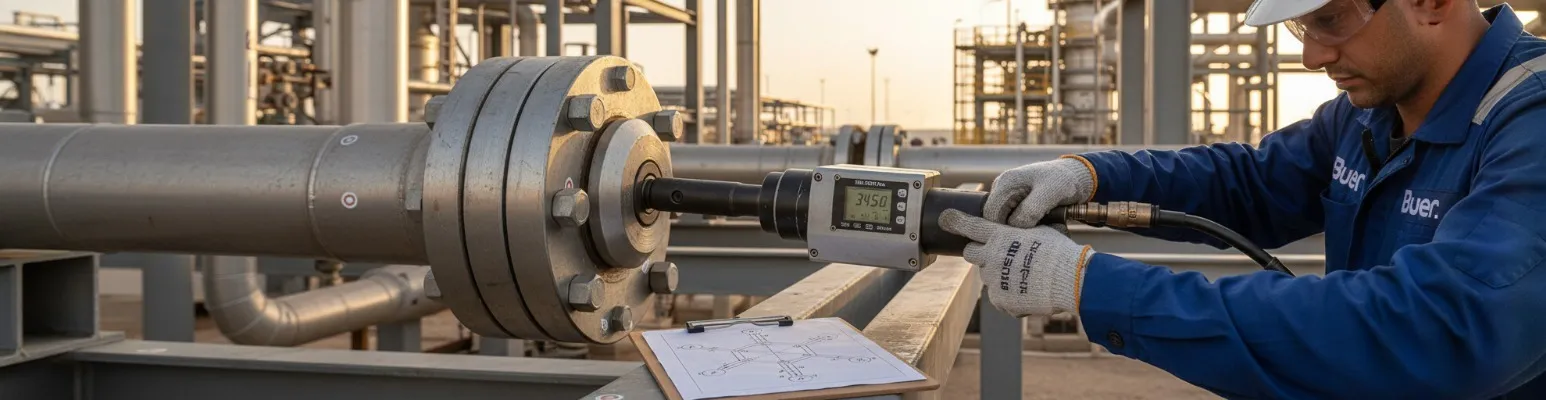
Hydraulic torque wrenches are the industrial standard for most process piping in Abu Dhabi oil & gas facilities.
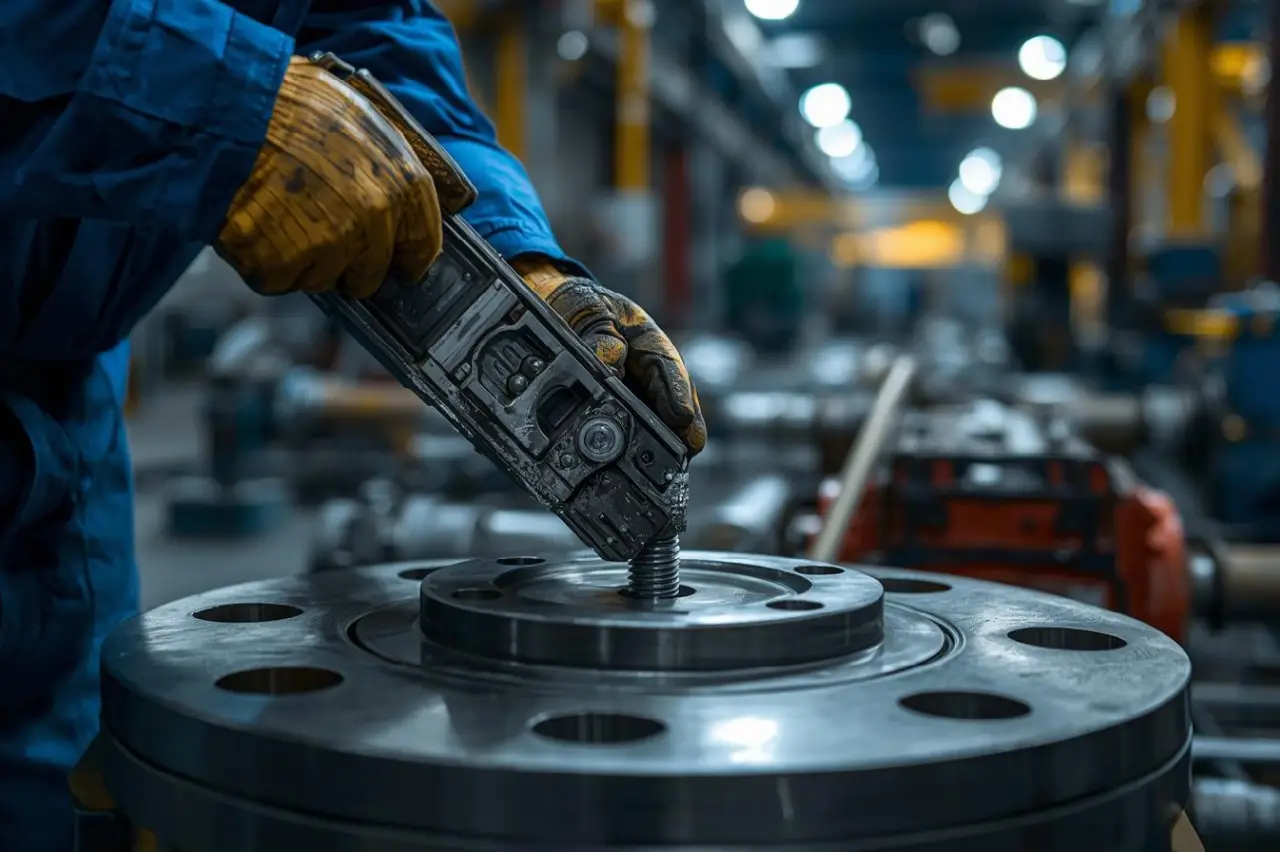
These tools apply rotational force through hydraulic pressure, delivering consistent torque values independent of operator strength. Modern systems allow simultaneous torquing of multiple bolts, dramatically reducing assembly time.
Best for:
- Large-diameter process piping (4″ NPS and above)
- High-pressure flanges (ASME Class 600+)
- Critical joints requiring precise, documented bolt loads
- Shutdown work where speed and reliability matter
Key advantage: Hydraulic torquing excels when you need repeatable results across dozens or hundreds of flanges during turnarounds.
For contractors delivering piping installation and commissioning services, hydraulic bolting capability isn’t optional—it’s the baseline expectation.
Hydraulic Bolt Tensioning: Maximum Precision
Here’s where precision reaches another level. Hydraulic tensioners don’t twist bolts—they stretch them directly through pure axial force.
The process: A hydraulic cylinder grips the bolt and pulls it, elongating the fastener. While stretched, the nut is advanced by hand. When pressure releases, the bolt contracts, creating clamping force without torsional stress.
Why this matters:
- Bolt load accuracy within ±10% of target (vs ±30% for torquing)
- Eliminates friction variables that affect torque-to-load relationships
- Prevents torsional stresses that contribute to fastener fatigue
- Allows uniform loading even on corroded or imperfect threads
Best for:
- Critical pressure vessels and reactor heads
- Turbine casings and rotating equipment
- High-consequence flanges where leak-tightness is non-negotiable
- Large-diameter, heavy-wall bolting (M52/2″ and above)
The trade-off? Tensioning equipment is more complex and requires greater clearance above bolt ends. But for joints where failure isn’t an option, it’s the gold standard.
Pneumatic Torquing: Remote and Offshore Applications
Pneumatic-powered torque tools use compressed air instead of hydraulics. They’re less common in Abu Dhabi facilities but valuable in specific scenarios:
- Locations without hydraulic power availability
- Explosive atmospheres requiring intrinsically safe equipment
- Offshore platforms with existing air systems
Most UAE industrial facilities favor hydraulic systems for their superior power density and control precision.
Joint Integrity Verification and Torque Audits
Installing bolts correctly is step one. Confirming they stay correct throughout service life is step two—and it’s often neglected.
Why Bolt Loads Change Over Time
Even properly installed joints experience load relaxation:
Thermal cycling: Temperature swings cause differential expansion between bolts, flanges, and gaskets. Each cycle micro-settles the gasket and reduces clamping force.
Gasket creep: Soft gaskets compress permanently under sustained load, especially at elevated temperatures. What was 100% target load at installation might be 70% six months later.
Vibration: Process equipment vibration gradually loosens fasteners, particularly when anti-vibration measures aren’t implemented.
Corrosion: In humid Gulf environments, thread corrosion changes friction coefficients and can cause loss of preload.
Implementing Torque Audit Programs
Leading facilities in Abu Dhabi implement systematic joint integrity management programs:
- Flange tracking databases: Document every critical joint with location, size, pressure class, gasket type, bolt specification, and target torque values.
- Initial torque verification: After assembly and heat-up, re-verify bolt torques to account for gasket seating and thermal effects.
- Scheduled re-torquing: High-consequence joints receive periodic torque verification—typically after thermal cycles, vibration events, or on defined intervals.
- Pre-shutdown inspections: Before planned turnarounds, audit critical flanges to identify leaks early and optimize repair scopes.
- Leak detection and response: Implement infrared scanning, ultrasonic leak detection, or visual inspection programs to catch issues before they escalate.
For facilities managing hundreds or thousands of flanges, this systematic approach transforms bolting from “tighten and hope” to “measure and manage”.
Common Bolting Mistakes That Lead to Flange Leaks
Let’s talk about what actually goes wrong in the field—because understanding failure modes is the first step toward prevention.
Mistake #1: Uneven Bolt Stress
This is the most prevalent error: some bolts overtightened, others barely snug.
What causes it:
- Skipping proper cross-pattern tightening sequences
- Working in cramped spaces where some bolts are accessible and others aren’t
- Using impact wrenches without calibrated torque control
- Different technicians tightening different sides of the flange
The result: Uneven gasket compression creates leak paths. In high-temperature service, heavily loaded bolts relax faster, making the problem worse over time.
Mistake #2: Wrong Torque Values
Using incorrect target torque happens more often than you’d expect:
- Technicians referencing outdated torque charts
- Failing to account for lubricant type (dry vs lubricated torque values differ by 30-50%)
- Mismatching bolt material grades with torque specifications
- Ignoring flange rating and gasket type in calculations
Why this matters: Undertorquing leaves inadequate gasket compression—leaks are inevitable. Overtorquing crushes gaskets, induces bolt yielding, or cracks flanges.
Mistake #3: Improper Tightening Sequence
ASME PCC-1 standards specify cross-pattern tightening in multiple passes—typically 30%, 50%, then 100% of target torque.
Skipping this graduated approach or tightening in circular patterns causes:
- Gasket extrusion as one side loads before the other
- Flange distortion, especially on thin-walled ratings
- Uneven residual stress distribution
Think of it like tightening a car’s wheel lug nuts. You’d never go in a circle—you’d use a star pattern for even pressure. Flanges work the same way, just with more consequences if you get it wrong.
Mistake #4: Ignoring Flange Face Condition
Even perfect bolting can’t seal damaged sealing surfaces:
- Weld spatter, scale, or corrosion products on flange faces
- Scratches, gouges, or mechanical damage
- Warped or out-of-flat surfaces from previous over-tightening
- Dirt or debris trapped between gasket and flange
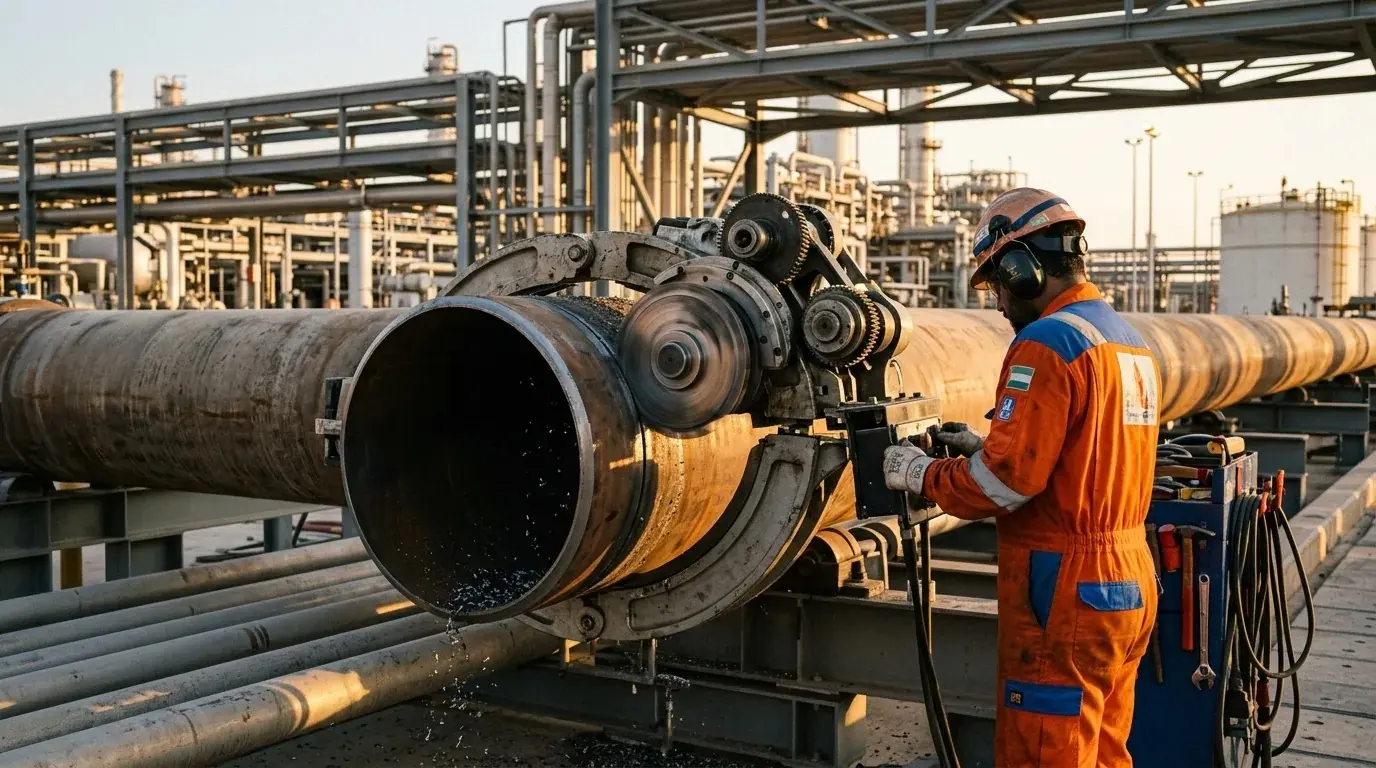
Solution: Before assembly, inspect and machine flange faces to proper surface finish specifications. Cold cutting services can restore damaged faces on site without flange removal—a significant time-saver during shutdowns.
Mistake #5: Poor Flange Alignment
Misaligned flanges—whether from poor fit-up, inadequate supports, or thermal movement—create impossible bolting conditions:
Even if you achieve target torque values, offset flanges load gaskets unevenly and induce bending stresses in bolts. The joint may seal initially but fails once the system reaches operating conditions.
Prevention: Address piping alignment during installation. Don’t use bolts to pull flanges together—that’s a recipe for premature failure.
Shutdown and Turnaround Bolting Best Practices
Turnarounds compress months of maintenance into days or weeks. Bolting operations—opening equipment, replacing gaskets, reassembling joints—sit squarely on the critical path.
Here’s what separates efficient shutdowns from scheduling disasters:
Plan Bolting Scopes in Advance
Don’t discover seized bolts or damaged threads when equipment is already open.
Pre-shutdown actions:
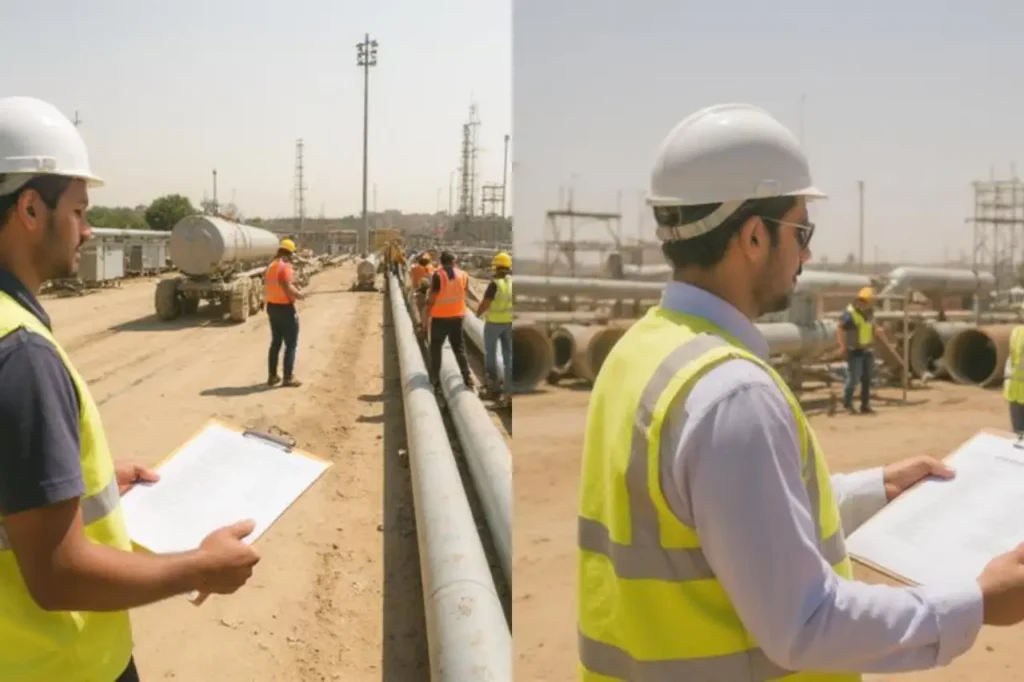
- Audit critical flanges weeks before shutdown to identify problem joints
- Pre-stage replacement bolts, gaskets, and specialty tools
- Identify joints requiring hydraulic bolt tensioning and schedule equipment accordingly
- Document torque specifications and tightening procedures for every connection
Prioritize Bolt Removal Strategy
Corrosion, galling, and previous overtightening turn bolt removal into the shutdown’s longest activity.
Techniques that save time:
- Apply penetrating lubricants 48-72 hours before shutdown begins
- Use controlled heating (when safe and permitted) to break corrosion bonds
- Have nut splitters, stud removers, and extraction tools ready
- Consider sacrificial fasteners—if a bolt won’t come out cleanly, cut it and replace
The facilities that finish shutdowns early budget more time for bolt removal than installation—because that’s where delays actually occur.
Standardize Assembly Procedures
Under shutdown pressure, shortcuts creep in. Counter this with documented, non-negotiable procedures:
- Approved flange assembly datasheets for every joint
- Torque values calculated per ASME standards and verified by engineering
- Cross-pattern tightening sequences enforced through supervision
- Mandatory witness points before cover-up
- Documented bolt torque readings for post-shutdown audit trails
For contractors delivering complete shutdown piping support, standardized bolting procedures aren’t bureaucracy—they’re how you hit schedule and avoid call-backs.
Control Quality Through Verification
The time to discover undertorqued bolts isn’t during hydrotest or startup—it’s immediately after assembly.
Verification steps:
- Use calibrated torque equipment with current certification
- Conduct 100% final pass verification after initial torquing
- Document “as-tightened” torque values for every bolt
- Re-verify torques after heat-up cycles before full operation
Torquing Standards for Oil & Gas: ASME and API Requirements
If you’re working in Abu Dhabi’s oil & gas sector, two standards govern bolted joint assembly:
ASME PCC-1: Guidelines for Pressure Boundary Bolted Flange Joint Assembly
This is the industry bible for flange bolting.
Key requirements:
- Graduated tightening passes (30%, 50%, 100% of target torque)
- Specified cross-pattern sequences based on bolt count
- Bolt load calculation methods accounting for friction and material properties
- Gasket compression requirements by type and service condition
ASME PCC-1 also provides detailed torque charts for standard ASME B16.5 flanges with common bolt materials. These tables are your starting point—but always verify calculations for your specific application.
API Standards: Industry-Specific Requirements
API 20E covers bolting for petroleum applications:
- Bolt material specifications and grades
- Quality requirements for high-temperature and sour service
- Traceability and documentation standards
For Abu Dhabi facilities operating under ADNOC specifications, compliance with API standards is typically mandatory.
UAE-Specific Regulatory Context
Beyond international standards, UAE industrial facilities must satisfy:
- OSHAD (Occupational Safety and Health Abu Dhabi) Code of Practice requirements
- ADNOC HSE specifications for contractor work
- Federal environmental protection regulations regarding emissions
Qualified bolting contractors in Abu Dhabi build these compliance requirements into every procedure from day one.
How to Choose a Qualified Bolting Contractor in Abu Dhabi
Not all “bolting services” are created equal. Here’s what separates competent execution from liability:
Equipment Inventory and Condition
Does the contractor own and maintain a full range of hydraulic torque and tensioning equipment?
Ask specifically about:
- Maximum torque capacity (should cover your largest flanges)
- Minimum bolt size capability (matters for instrument connections)
- Equipment calibration status and certification
- Availability of backup tools (equipment failures happen—redundancy matters)
Contractors who rent equipment for your job introduce variables. You want teams using familiar, well-maintained tools they operate daily.
Technician Training and Certification
Bolting looks simple until something goes wrong. Proper training makes the difference.
Look for:
- Formal bolting competency certifications (ECITB MJI modules, manufacturer training)
- Documented understanding of ASME PCC-1 and API standards
- Experience with your specific facility type (refinery vs petrochemical vs pipeline)
- Safety certifications appropriate for Abu Dhabi industrial work
Track Record in Shutdown Environments
Turnaround bolting operates under intense schedule pressure. Contractors need demonstrated performance in these conditions:
- Can they mobilize quickly when critical path activities accelerate?
- Do they maintain adequate crew sizes to work multiple fronts simultaneously?
- Have they executed similar scopes without schedule delays?
Integrated Service Capability
The most efficient projects don’t just handle bolting in isolation. Look for contractors offering complementary capabilities:
- Flange facing and machining to repair damaged sealing surfaces before assembly
- Gasket cutting and installation as part of joint assembly scope
- Hydrostatic testing support to verify joint integrity post-assembly
- Leak detection and remediation if issues arise during commissioning
Single-source contractors eliminate coordination overhead between multiple specialty vendors—a significant advantage when every hour of shutdown counts.
Local Presence and Responsiveness
When a critical flange starts leaking at 2 AM, you need contractors who respond in hours, not days.
Abu Dhabi-based bolting teams with equipment stored locally deliver this responsiveness. For facilities across Mussafah industrial area, ICAD, and Khalifa Industrial zones, proximity directly impacts emergency response times.
Your Next Steps: Moving from Awareness to Action
You now understand why bolt torquing isn’t just a maintenance task—it’s a core reliability and safety discipline that directly impacts your facility’s performance.
The difference between operations that suffer chronic flange leaks and those that don’t comes down to three factors:
- Systematic approach: Documented procedures, verified execution, and ongoing integrity monitoring
- Proper equipment: Calibrated hydraulic tools matched to your piping specifications
- Qualified execution: Trained technicians who understand both standards and real-world challenges
Whether you’re planning an upcoming turnaround, responding to recurring leak issues, or implementing a comprehensive joint integrity program, the technical solutions exist. What matters is partnering with contractors who execute consistently and reliably.
Need bolt torquing services for Abu Dhabi industrial facilities? BIJER’s specialized bolting teams deliver manual, hydraulic, and tensioning services across all seven emirates—from routine maintenance to critical shutdown scopes. We support oil & gas, petrochemical, and utility facilities with complete documentation and OSHAD-compliant procedures.
for site-specific torque calculations and transparent scope proposals aligned with your facility’s standards and schedule.
About the Author: This guide was developed by BIJER’s technical team, drawing on direct experience delivering bolting, flange management, and piping integrity services across Abu Dhabi’s industrial facilities since 2024. Our crews execute controlled bolting daily in ADNOC plants, petrochemical facilities, and refinery environments throughout the UAE.
Related Resources:
- Complete Guide to Cold Cutting Services in Abu Dhabi
- Shutdown Piping Services: Complete Scope Management
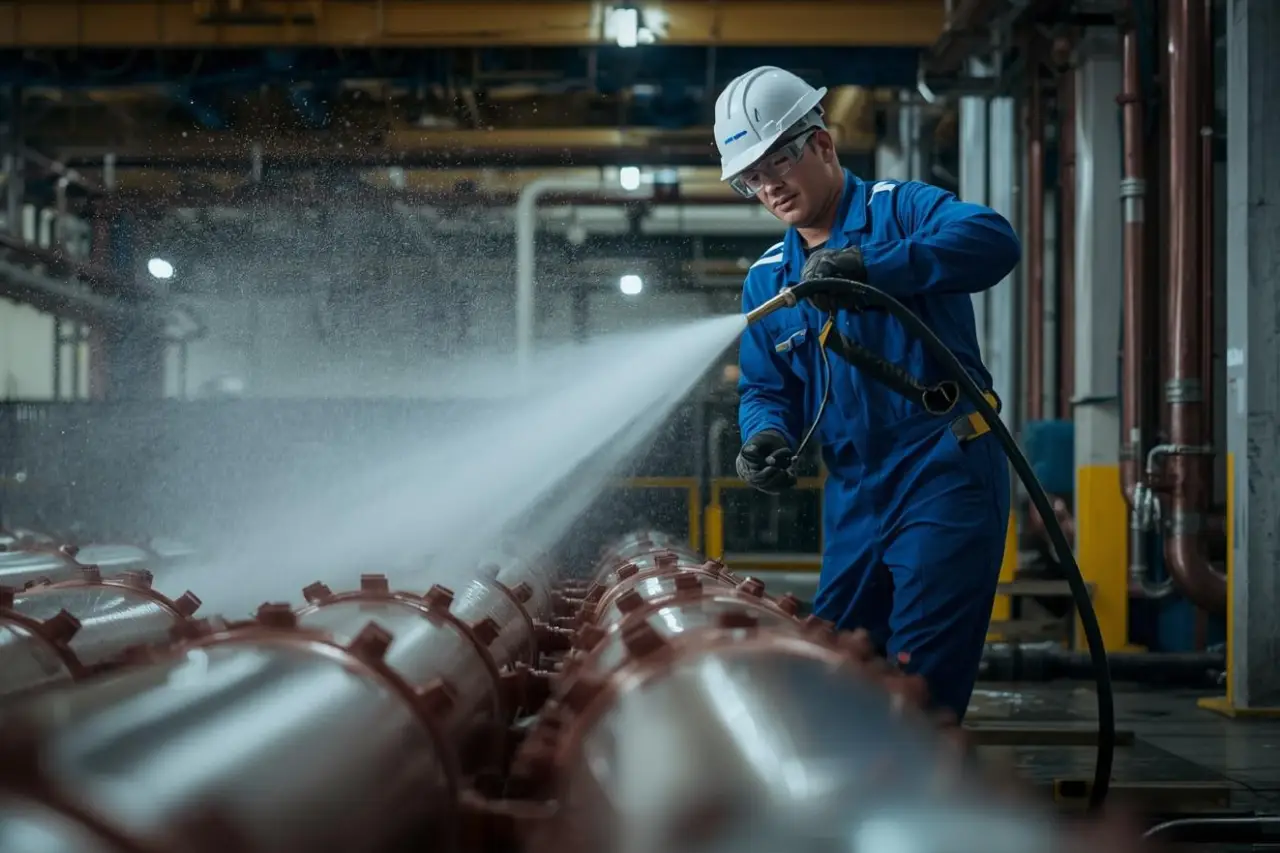
- Understanding Hydro Jetting for Industrial Pipeline Cleaning
Questions about implementing joint integrity programs at your facility? Our engineering team provides complimentary technical consultations for Abu Dhabi industrial operations.