Pipeline Hydro Jetting Services in Abu Dhabi: Cost-Effective Cleaning for Industrial Systems
By BIJER Technical Team | Updated January 2026
Your heat exchanger efficiency just dropped 15%. Again. The maintenance team suspects fouling, but chemical cleaning hasn’t worked in three months. Production rates are sliding. Energy costs are climbing. And your operations manager wants answers—preferably before the next board meeting.
This scenario repeats across Abu Dhabi’s industrial facilities with frustrating regularity. Fouled heat exchangers, blocked pipelines, and contaminated vessels don’t just reduce efficiency—they threaten production continuity, increase energy consumption, and create safety risks. Traditional cleaning methods often provide temporary relief at best, leaving facilities trapped in cycles of repeated treatments and declining performance.
There’s a better approach. Industrial hydro jetting delivers thorough, chemical-free cleaning that restores equipment to near-original condition while supporting environmental compliance and long-term cost reduction. If you manage oil & gas facilities, petrochemical plants, or utility operations in Abu Dhabi, understanding when and how to deploy hydro jetting transforms maintenance from reactive firefighting to proactive asset management.
Here’s what you need to know.
What Is Industrial Hydro Jetting (And Why It’s Not Just Drain Cleaning)
Let’s clear up a common misconception immediately. Industrial hydro jetting bears little resemblance to the residential drain cleaning services advertised in shopping mall flyers.
Residential hydro jetting operates at 1,500-4,000 PSI to clear household drains and sewer lines. It’s effective for grease buildup, tree roots, and typical household blockages.
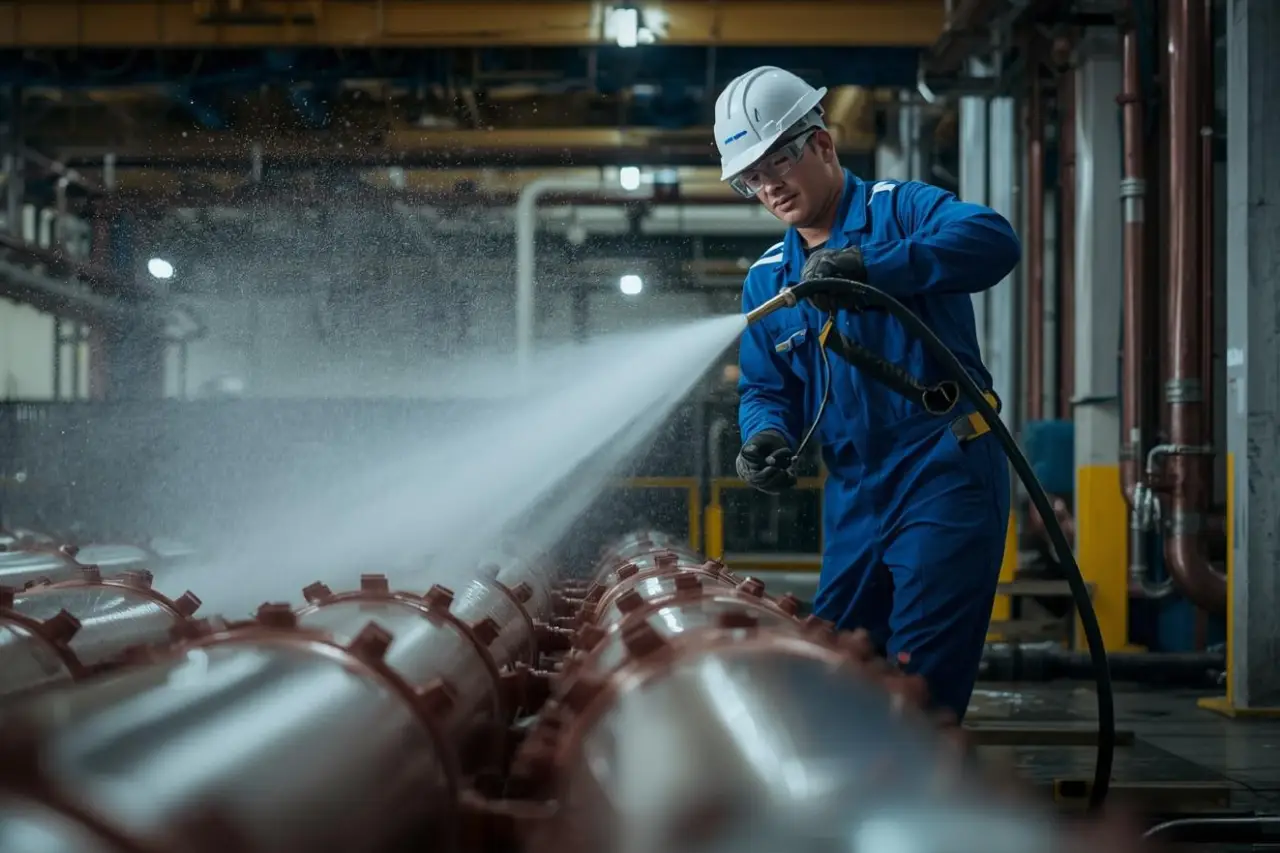
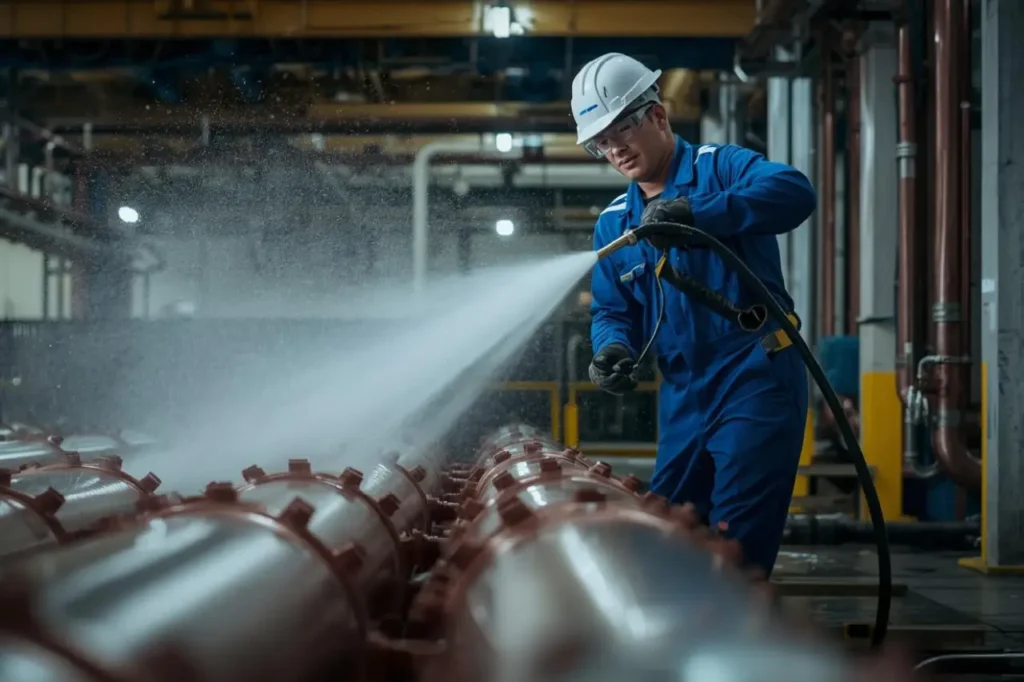
Industrial hydro jetting operates at vastly higher pressures—typically 10,000 to 40,000 PSI—and addresses entirely different challenges. We’re talking about removing:
- Hard mineral scale in heat exchanger tubes
- Polymerized hydrocarbon deposits in process piping
- Coke and catalyst fouling in refinery equipment
- Corrosion products and biological growth in cooling water systems
- Construction debris and weld slag in new pipeline commissioning
The equipment, techniques, safety protocols, and operator training exist in completely different categories. When facility managers search for “hydro jetting Abu Dhabi,” they need industrial-grade capability—not a plumbing contractor with a pressure washer.
When Hydro Jetting Becomes Your Best Cleaning Solution
Industrial hydro jetting excels in specific applications where other methods struggle or fail entirely.
Heat Exchangers: Restoring Thermal Efficiency
Fouled heat exchanger tubes lose thermal transfer capability progressively. A 0.5mm fouling layer can reduce efficiency by 20% or more, forcing your facility to consume extra energy to maintain process temperatures.
Chemical cleaning works for some foulants but struggles with hard, brittle deposits. Mechanical tube brushing is labor-intensive and inconsistent. Hydro jetting at 200-3,000 bar enters cracks in deposits, propagates fractures, and flushes material away completely.
Effectiveness comparison (based on industry data):
- Chemical cleaning: 70-80% deposit removal
- Mechanical brushing: 60-75% removal
- Hydroblasting: 85% removal
- Ultrasonic + hydroblasting combination: Near 100%
For facilities managing shell-and-tube heat exchangers, air coolers, or plate exchangers in Abu Dhabi’s oil and gas sector, hydro jetting often delivers the most complete cleaning per maintenance cycle.
Pipeline Pre-Commissioning: Removing Construction Debris
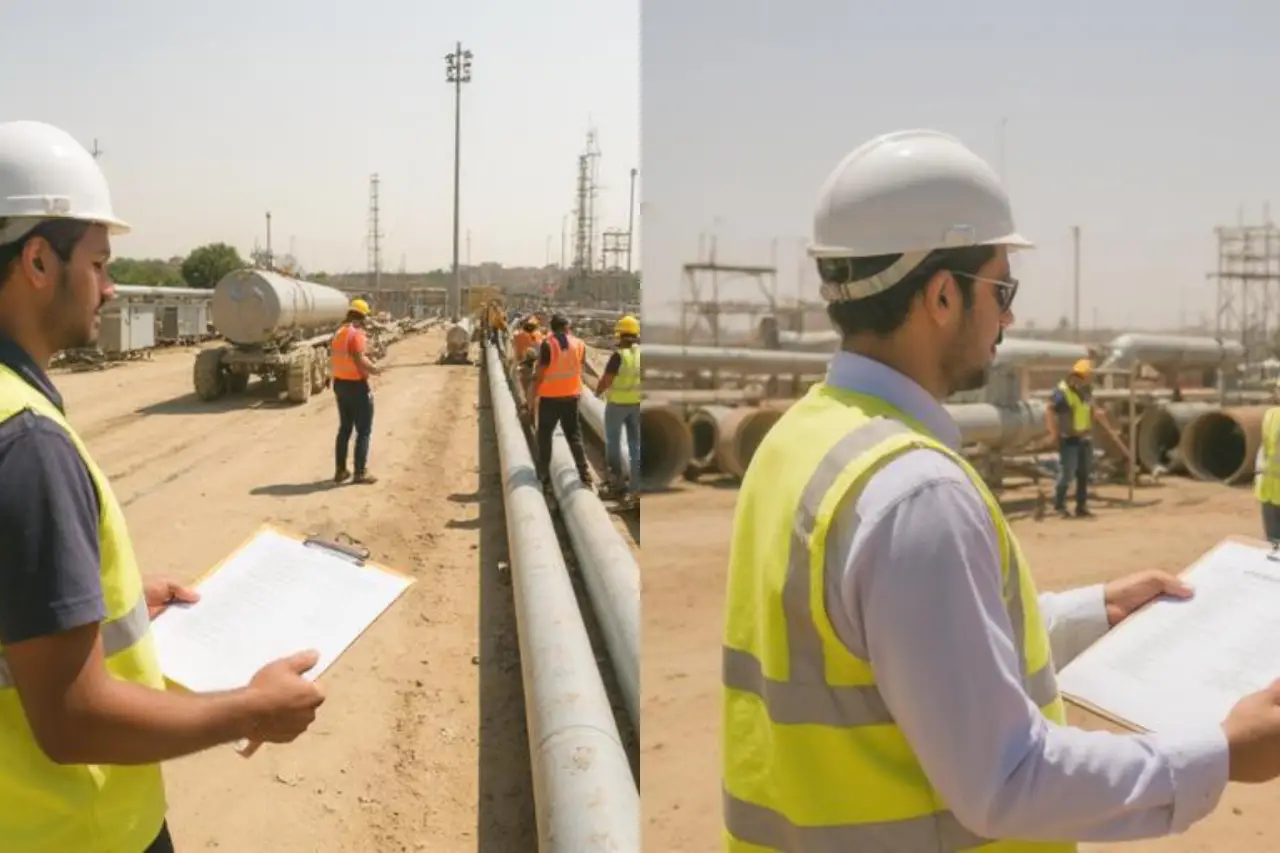
New pipeline installations accumulate weld slag, mill scale, construction debris, and protective coatings during fabrication and installation. Before commissioning, this material must be removed to prevent damage to downstream equipment like pumps, valves, and instrumentation.
Hydro jetting provides thorough internal cleaning while simultaneously verifying pipeline integrity. The high-pressure water flow reveals any weak points or defects that might cause future failures.
For contractors delivering complete piping installation services, integrating hydro jetting into commissioning sequences ensures clean handover and reduces startup issues.
Tanks and Vessels: Confined Space Cleaning Without Chemical Hazards
Cleaning large storage tanks, process vessels, and reactors traditionally required confined space entry by workers with manual tools or chemical circulation systems. Both approaches create significant HSE risks: toxic atmospheres, physical hazards, and chemical exposure.
Remote-controlled hydro jetting tools allow thorough vessel cleaning with minimal or no confined space entry. Operators control high-pressure lances from outside the vessel, dramatically reducing personnel exposure while achieving superior cleaning results.
Cooling Water Systems: Biological and Scale Control
In Abu Dhabi’s climate, cooling water systems battle constant challenges: high ambient temperatures, elevated water temperatures, and mineral-rich makeup water. The result? Aggressive fouling from biological growth, calcium carbonate scale, and corrosion products.
Periodic hydro jetting of cooling water piping, condenser tubes, and distribution headers maintains system efficiency without the environmental concerns of aggressive biocides and scale inhibitors.
High-Pressure (HP) vs Ultra-High-Pressure (UHP) Jetting: Matching Method to Application
Not all hydro jetting operates at the same pressure. Understanding the distinction guides appropriate method selection.
High-Pressure Jetting (HP): 10,000-20,000 PSI
This range handles most industrial cleaning applications effectively:
- Heat exchanger tube cleaning
- General pipeline fouling removal
- Tank and vessel interior cleaning
- Surface preparation for coating application
HP jetting balances cleaning power with equipment portability and cost-effectiveness. Most industrial maintenance programs in Abu Dhabi facilities employ HP systems for routine cleaning cycles.
Ultra-High-Pressure Jetting (UHP): 20,000-40,000+ PSI
UHP systems address the toughest fouling scenarios:
- Extremely hard mineral scale
- Polymerized and carbonized deposits
- Cutting through concrete or refractory materials
- Surface preparation requiring near-white metal finish
The trade-off? UHP equipment is more specialized, requires enhanced safety protocols, and commands higher mobilization costs. Deploy it when HP methods prove insufficient or when surface preparation standards demand it.
The Compelling Benefits: Why Hydro Jetting Wins Over Alternatives
Industrial facilities increasingly favor hydro jetting for reasons extending beyond just cleaning effectiveness.
Chemical-Free Operation Supports Environmental Compliance
UAE environmental regulations tighten continuously. Chemical cleaning generates hazardous waste requiring treatment and disposal. Spent cleaning solutions contain dissolved metals, acids, caustics, and process contaminants—all subject to strict disposal protocols.
Hydro jetting uses only water. The waste stream contains removed fouling material but no added chemicals. This simplifies environmental compliance, reduces disposal costs, and aligns with corporate sustainability commitments.
Thorough Cleaning Reduces Maintenance Frequency
Chemical treatments often clean surfaces incompletely, leaving residual deposits that accelerate refouling. You’re back to the same problem in months—or weeks.
Hydro jetting achieves more complete deposit removal. Clean surfaces resist fouling longer, extending intervals between maintenance interventions. The higher upfront cost per cleaning event is offset by fewer cleaning cycles annually.
Think of it as paying more per cleaning but cleaning less frequently—the total annual cost often favors hydro jetting.
Shutdown Integration Minimizes Downtime
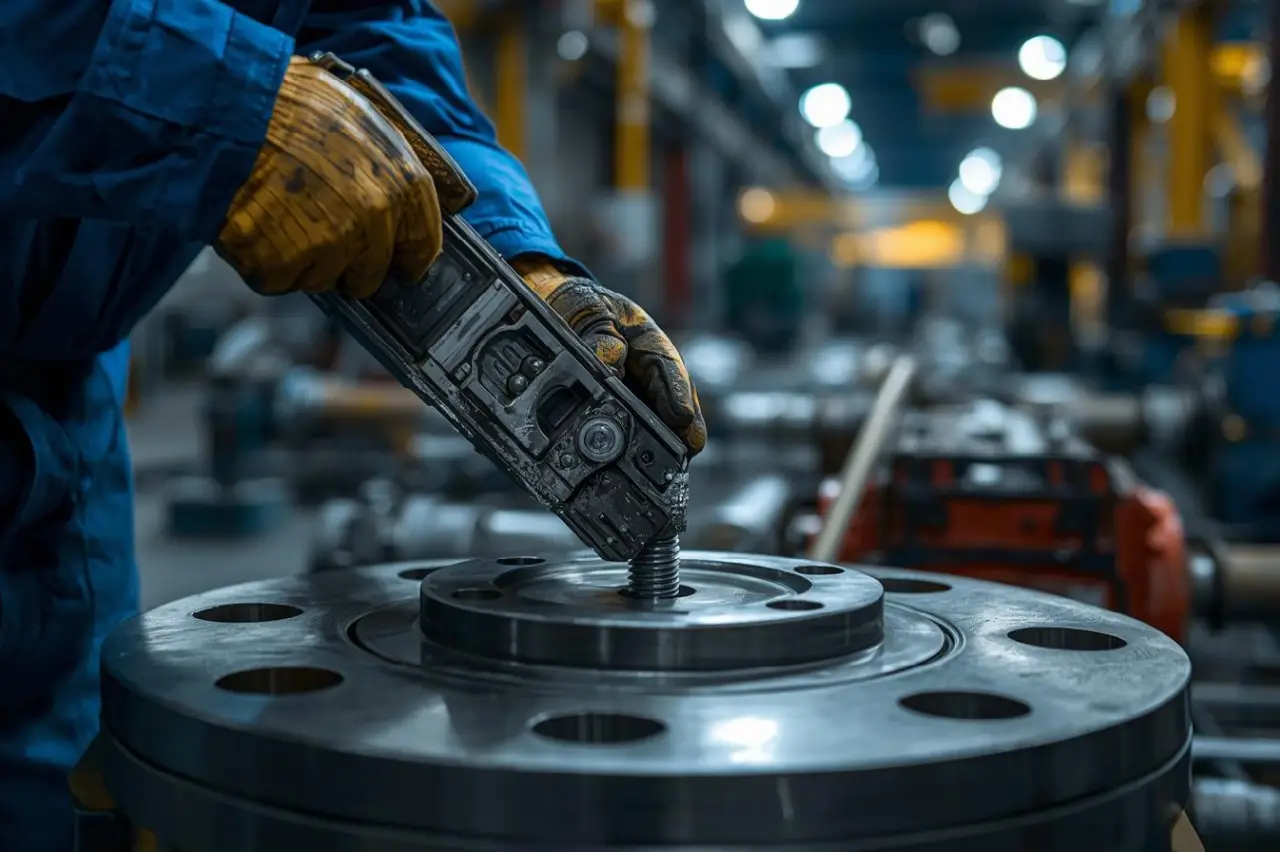
During planned turnarounds, hydro jetting integrates seamlessly with other maintenance activities. While bolt torquing crews work on flange disassembly and cold cutting teams prepare tie-in points, hydro jetting can clean opened equipment simultaneously.
This parallel execution compresses shutdown critical paths compared to sequential chemical cleaning, which requires circulation time, neutralization, and disposal before proceeding to next activities.
Surface Preparation Quality Exceeds Mechanical Methods
Beyond cleaning, hydro jetting provides excellent surface preparation for protective coatings. The high-pressure water removes corrosion products, old coatings, and contaminants while creating surface profiles suitable for coating adhesion—without generating heat or mechanical stress that damages base metal.
Safety Considerations: High-Pressure Operations in Confined Spaces
The pressures involved in industrial hydro jetting create serious hazards requiring rigorous safety protocols.
Primary Hazards and Controls
Injection injuries: High-pressure water can penetrate skin and inject into tissue, causing severe internal injuries. Even small breaks in hoses create dangerous spray patterns. Controls include:
- Mandatory pressure relief before approaching equipment
- High-visibility safety zones around operating equipment
- Proper PPE including face shields and protective clothing
- Never pointing jets toward personnel, even when depressurized
Confined space risks multiply during jetting: Poor ventilation, limited escape routes, and presence of water create compounded hazards. Required controls include:
- Continuous atmospheric monitoring for oxygen and toxic gases
- Trained standby personnel outside the confined space
- Remote-operated tools to minimize entry requirements where possible
- Lockout/tagout protocols for all equipment
Electrical hazards increase: Water and electricity create electrocution risks. Ground fault protection, proper equipment bonding, and isolation of electrical systems in work areas are non-negotiable.
For Abu Dhabi industrial facilities operating under OSHAD requirements, hydro jetting contractors must demonstrate comprehensive safety management systems, not just equipment capability.
Cost Comparison: Hydro Jetting vs Chemical vs Mechanical Methods
Smart facility managers evaluate total cost of ownership, not just per-event pricing.
Upfront Cost Comparison
- Chemical cleaning: $2,000-8,000 per heat exchanger depending on size and chemical requirements
- Mechanical methods (brushing): $1,500-5,000 depending on tube count and accessibility
- Hydro jetting: $500-2,500 for standard equipment, higher for specialized applications
Hydro jetting typically costs more per event than chemical treatment. But this comparison misses the bigger picture.
Total Cost of Ownership Analysis
Cleaning frequency multiplier: Chemical cleaning may require 2-3 cycles per year due to incomplete deposit removal. Hydro jetting’s more thorough cleaning extends to 12-18 months between services.
Disposal cost differentials: Chemical waste disposal in UAE can add 20-40% to cleaning costs. Hydro jetting waste (fouling material in water) costs significantly less to handle.
Downtime value: In production facilities, every hour offline translates to lost revenue. Hydro jetting’s faster execution (no soak time, circulation, neutralization) reduces downtime duration.
Energy efficiency recovery: Hydro jetting’s superior cleaning restores heat transfer closer to design values. The energy savings from improved efficiency can pay for the cleaning within months.
Annual cost modeling frequently shows hydro jetting delivering 15-30% lower total cost than repeated chemical treatments, despite higher per-event pricing.
Industries Served: Where Hydro Jetting Delivers Maximum Value
Oil & Gas Production and Refining
Abu Dhabi’s energy sector relies on hydro jetting for heat exchanger maintenance, crude unit cleaning, and pipeline commissioning. The chemical-free approach aligns with increasingly strict environmental requirements while maintaining production reliability.
Petrochemical Manufacturing
Polymerization processes create stubborn deposits that resist chemical cleaning. Hydro jetting’s mechanical force removes these materials effectively, supporting production continuity in facilities across Mussafah and ICAD industrial zones.
Power Generation
Condensers, cooling towers, and heat recovery equipment in power plants accumulate scale and biological fouling that reduces efficiency and increases fuel consumption. Regular hydro jetting maintains thermal performance and extends equipment life.
Water and Wastewater Treatment
Municipal and industrial water treatment facilities use hydro jetting for membrane cleaning, tank maintenance, and pipeline servicing. The method’s compatibility with potable water systems makes it particularly valuable in this sector.
Preparing Your Facility for Hydro Jetting Services
Successful hydro jetting projects start with proper preparation.
Pre-Mobilization Planning
Define scope precisely: Which equipment needs cleaning? What’s the target cleanliness standard? Are there known problem deposits? Clear scope definition prevents surprises and change orders.
Isolate systems properly: Ensure equipment is fully isolated, depressurized, and drained before contractor mobilization. Verify isolation with lockout/tagout procedures.
Provide access: Hydro jetting equipment requires proximity to work areas. Ensure adequate access for hose routing, waste collection, and emergency egress.
Arrange waste handling: Coordinate disposal or treatment of cleaning waste streams. Know whether material classifies as hazardous or non-hazardous waste.
Safety Coordination
Permit requirements: Secure cold work permits, confined space entry permits (if required), and any other facility-specific authorizations.
HSE briefings: Conduct site-specific safety orientations covering facility hazards, emergency protocols, and SIMOPS considerations.
Communication protocols: Establish clear channels for progress updates, issue resolution, and emergency notification.
Facilities that invest time in thorough pre-job planning consistently achieve better project outcomes—on schedule, within budget, and without incidents.
Your Path to Cleaner, More Efficient Industrial Systems
Industrial fouling isn’t just a maintenance nuisance—it’s a continuous drain on efficiency, reliability, and profitability. Traditional cleaning methods often provide incomplete solutions, trapping facilities in cycles of repeated interventions and declining performance.
Hydro jetting breaks this cycle. The combination of thorough cleaning, environmental compliance, and reduced maintenance frequency makes it the preferred solution for forward-thinking facility managers across Abu Dhabi’s industrial landscape.
Whether you’re addressing chronic heat exchanger fouling, preparing new pipelines for commissioning, or planning shutdown cleaning scopes, hydro jetting delivers measurable results: restored efficiency, extended equipment life, and lower total cost of ownership.
Need hydro jetting services for your Abu Dhabi facility? BIJER delivers high-pressure and ultra-high-pressure water jetting for heat exchangers, pipelines, tanks, and process equipment across all seven emirates. Our integrated approach combines cleaning with piping installation, cold cutting, and bolt torquing services—reducing coordination overhead and supporting efficient project execution.
for site-specific assessments and transparent project proposals aligned with your maintenance schedule and budget requirements.
About the Author: This guide was developed by BIJER’s technical team based on direct experience delivering hydro jetting and complete piping services across Abu Dhabi’s oil & gas, petrochemical, and industrial facilities since 2024. Our crews execute cleaning, installation, and maintenance projects daily in ADNOC facilities, refineries, and manufacturing plants throughout the UAE.
Related Resources:
- Complete Guide to Cold Cutting Services in Abu Dhabi
- Bolt Torquing and Joint Integrity Management
- How to Choose a Reliable Piping Contractor in Abu Dhabi
Questions about integrating hydro jetting into your next shutdown or addressing chronic fouling issues? Our engineering team provides complimentary technical consultations for Abu Dhabi industrial operations.