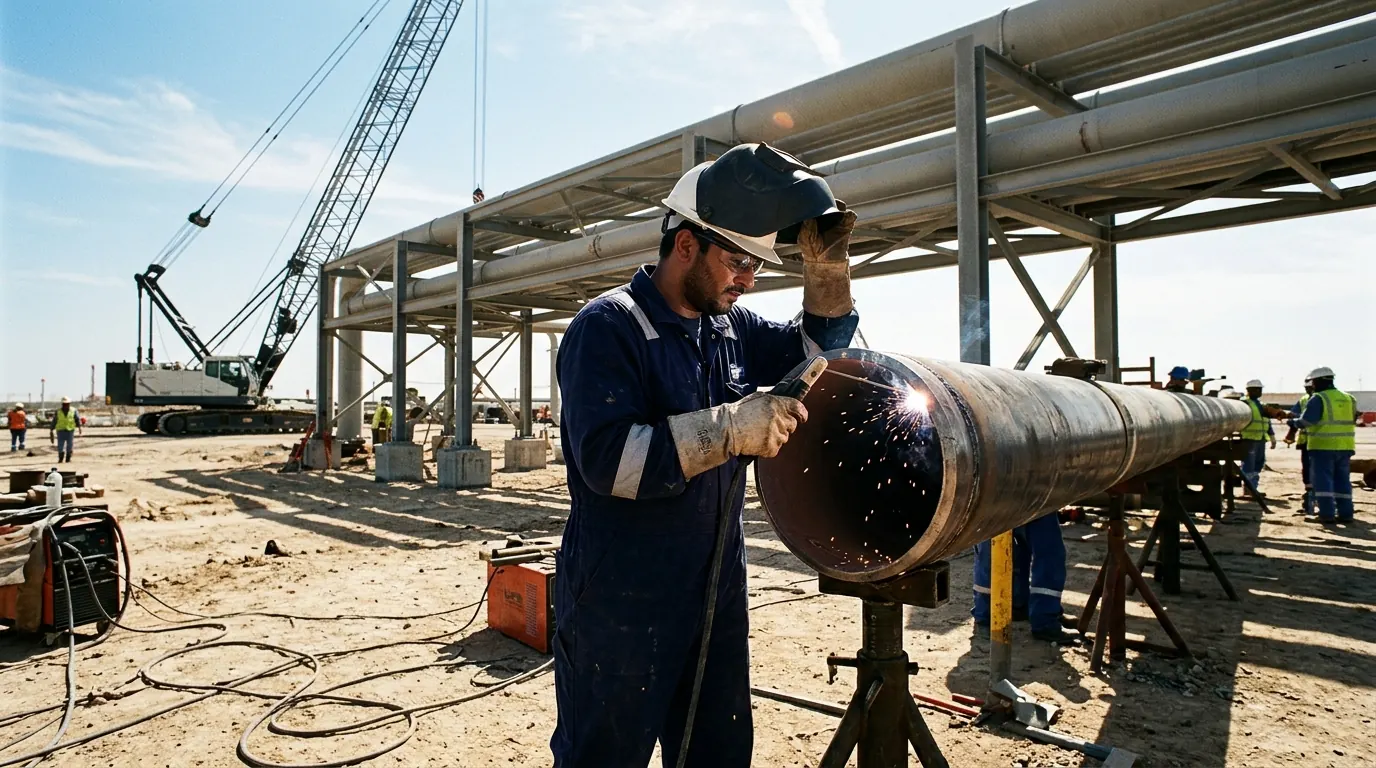
Anyone who works with industrial piping will hear two terms again and again: pipe cutting and pipe beveling. They often happen back to back, sometimes with the same tool, so they are easy to confuse. But they serve different purposes, and mixing them up can lead to weak welds, wasted material, and costly rework.
This guide explains what each process involves, how they differ, and when each one is needed. Whether you manage a refinery shutdown, a water network upgrade, or a fabrication project, understanding the distinction helps you plan better and communicate clearly with your contractor. A reliable pipeline services company will typically handle both steps as part of one coordinated scope.
What Is Pipe Cutting?
Pipe cutting is the process of severing a length of pipe to a required size or removing a damaged or obsolete section. The goal is a clean, accurate separation, usually at a right angle (square cut) to the pipe’s axis.
Pipe is cut for several reasons:
- Sizing new pipe to fit a layout or spool drawing
- Removing corroded, cracked, or leaking sections
- Decommissioning or dismantling old lines
- Making tie-ins to existing systems
- Preparing a pipe end for further machining
A good cut is square, free of heavy burrs, and accurate to the specified length. How good it needs to be depends on what happens next. If the pipe will be threaded, grooved, or coupled mechanically, a clean square cut may be all you need. If it will be welded, the cut is only the first step.
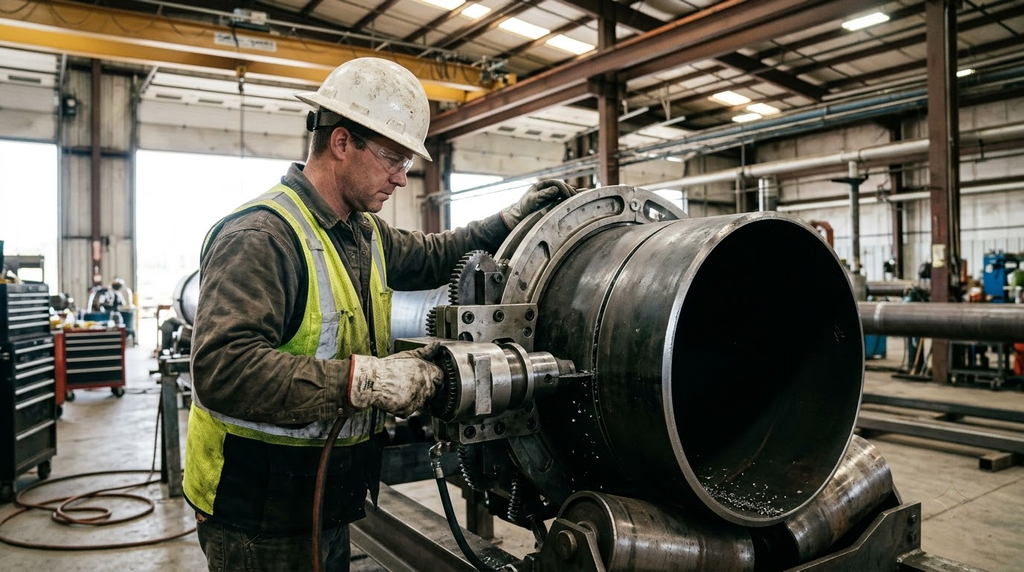
Alt text – Cold cutting
Common Pipe Cutting Methods
Mechanical cutting. Hacksaws, band saws, abrasive chop saws, and rotary pipe cutters use blades or cutting wheels to slice through the pipe. These methods are common for smaller diameters and workshop settings.
Thermal cutting. Oxy-fuel torches, plasma cutters, and laser systems melt or burn through the metal. They are fast and effective on thick-walled carbon steel but produce heat, slag, and sparks.
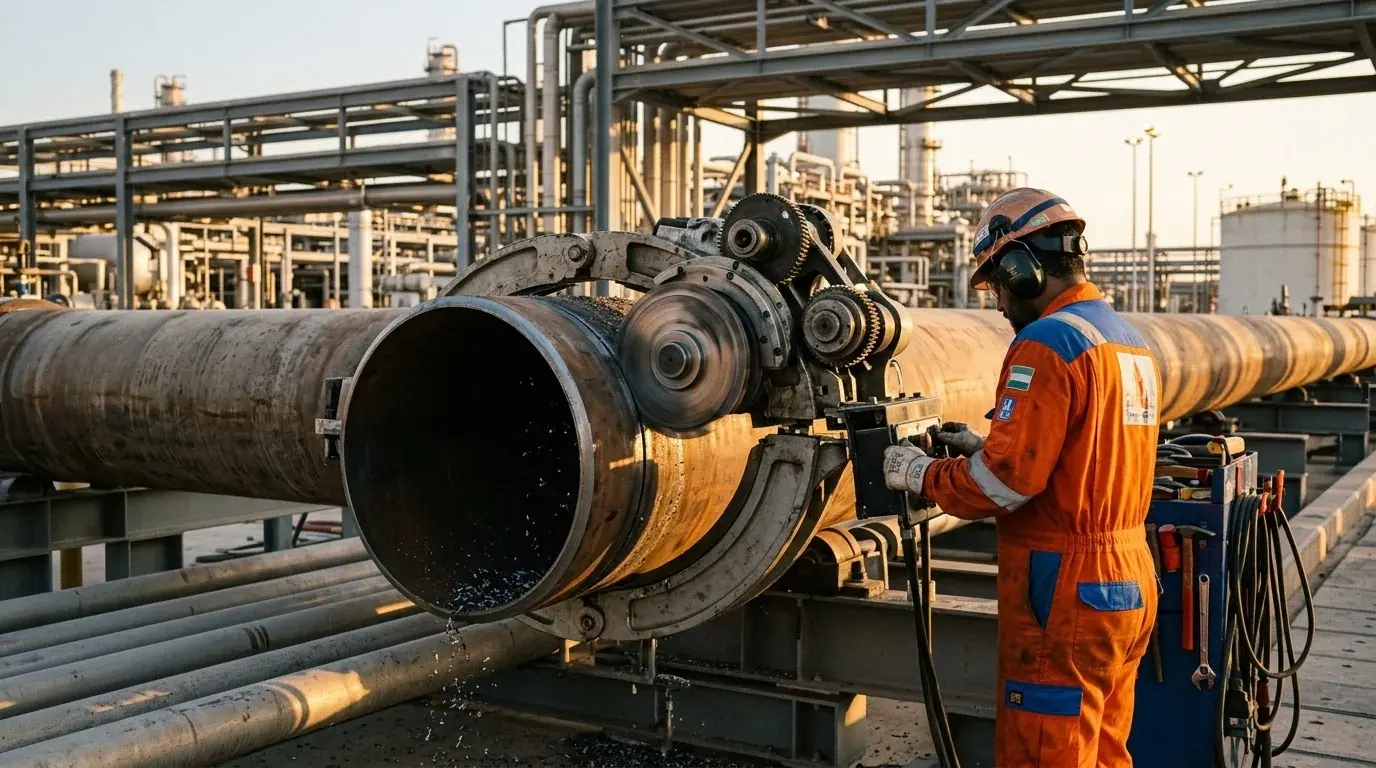
Orbital and clamshell cutting. These machines clamp around the pipe and rotate a cutting tool around its circumference. They are widely used for large-diameter or fixed-position pipe where the pipe cannot be rotated.
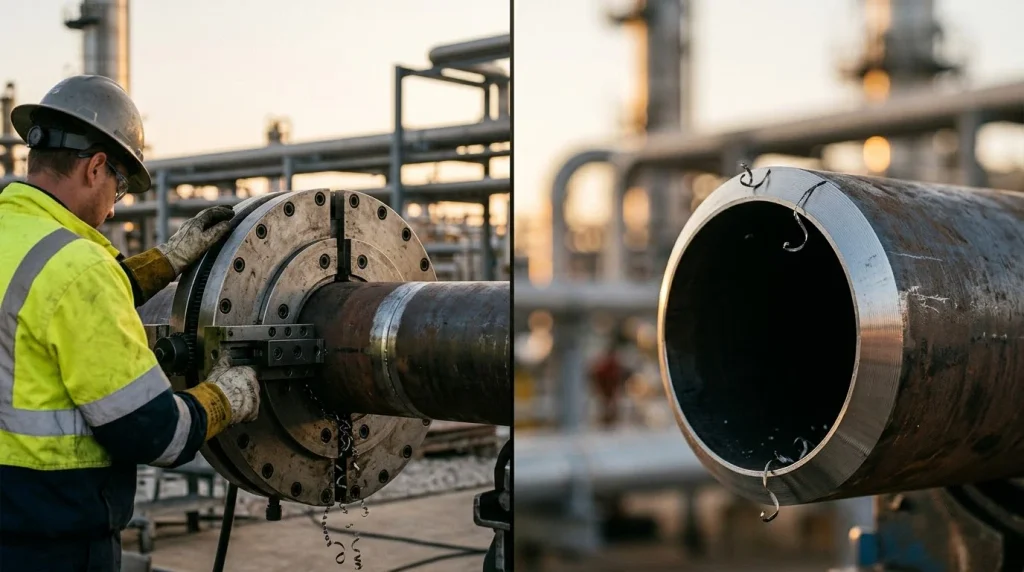
Cold cutting. Cold cutting uses mechanical tools that generate no sparks, flame, or significant heat. It is the preferred approach wherever ignition risk is unacceptable. Operators in oil and gas, petrochemical, and chemical plants often rely on cold cutting services when working on lines that may contain residual hydrocarbons or in areas classified as hazardous.
What Is Pipe Beveling?
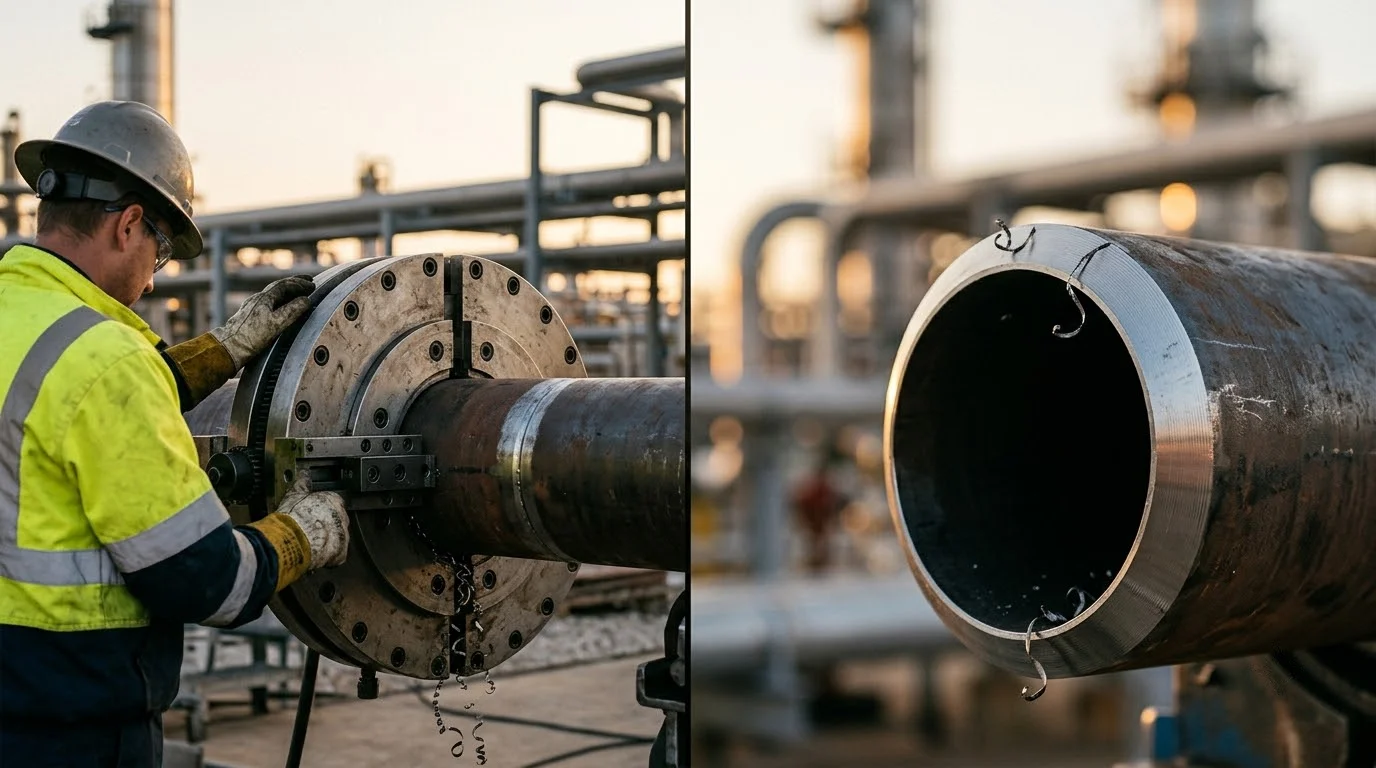
Pipe beveling is a machining or grinding process that shapes the end of a pipe into an angled edge. Instead of leaving a flat 90-degree face, the pipe end is cut at a specific angle so that two pipe ends meet in a V-shaped, U-shaped, or J-shaped groove.
The purpose is weld quality. When you butt-weld two pipes together, a square edge does not allow the weld metal to reach the full thickness of the joint. A bevel opens up space so the welder can deposit filler metal through the entire wall thickness, creating a fully fused, strong joint.
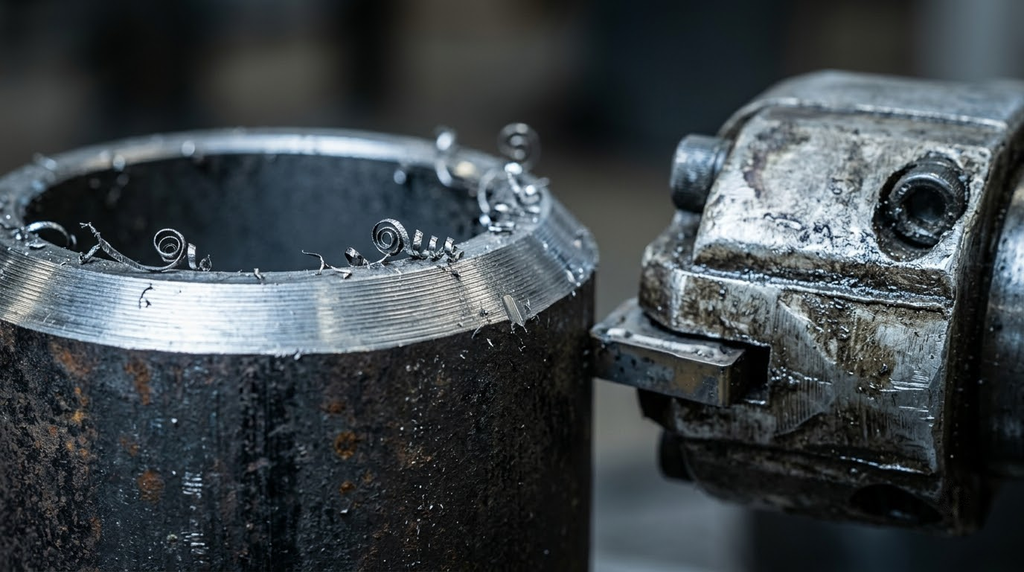
Alt text – Pipe beveling
Typical Bevel Angles and Features
- Bevel angle: Commonly 30 to 37.5 degrees for standard butt welds, though specifications vary by code, material, and wall thickness.
- Root face (land): A small flat section left at the bottom of the bevel, usually around 1.5 mm to 3 mm, which supports the root pass and prevents burn-through.
- Root gap: The small spacing between the two pipe ends when fitted up for welding.
- Compound bevels: For very thick walls, a double-V or compound bevel reduces the volume of weld metal required and limits distortion.
Common Pipe Beveling Methods
Portable beveling machines. These clamp inside or outside the pipe and use rotating cutter heads to produce precise, repeatable bevels on site.
Handheld grinders. Grinders can create bevels on smaller jobs but depend heavily on operator skill, and consistency is a risk.
Flame or plasma beveling. Thermal methods can bevel thick sections quickly, though the surface often needs grinding afterward to remove oxides and slag.
Lathe or dedicated bevelers. In fabrication shops, stationary machines produce very consistent bevels at high volume.
Key Differences Between Pipe Cutting and Pipe Beveling
| Factor | Pipe Cutting | Pipe Beveling |
| Primary purpose | Separate or size the pipe | Prepare the pipe end for welding |
| Resulting edge | Usually square (90°) | Angled, with root face |
| Typical stage | Early in the process | After cutting, before welding |
| Key measurement | Length and squareness | Angle, root face, and surface finish |
| Impact on weld | Indirect | Direct and critical |
| Tools | Saws, torches, orbital cutters | Beveling machines, grinders, lathes |
In short, cutting changes the length of the pipe, while beveling changes the shape of the pipe end. Cutting answers the question “how long should this be?” Beveling answers “how will this join to the next piece?”
How the Two Processes Work Together
In most welded piping work, cutting and beveling are sequential steps in the same workflow:
- Measure and mark the pipe according to drawings.
- Cut the pipe to length, ideally with a square, burr-free end.
- Bevel the end to the specified angle and root face.
- Clean the bevel and adjacent surfaces of oil, rust, scale, and moisture.
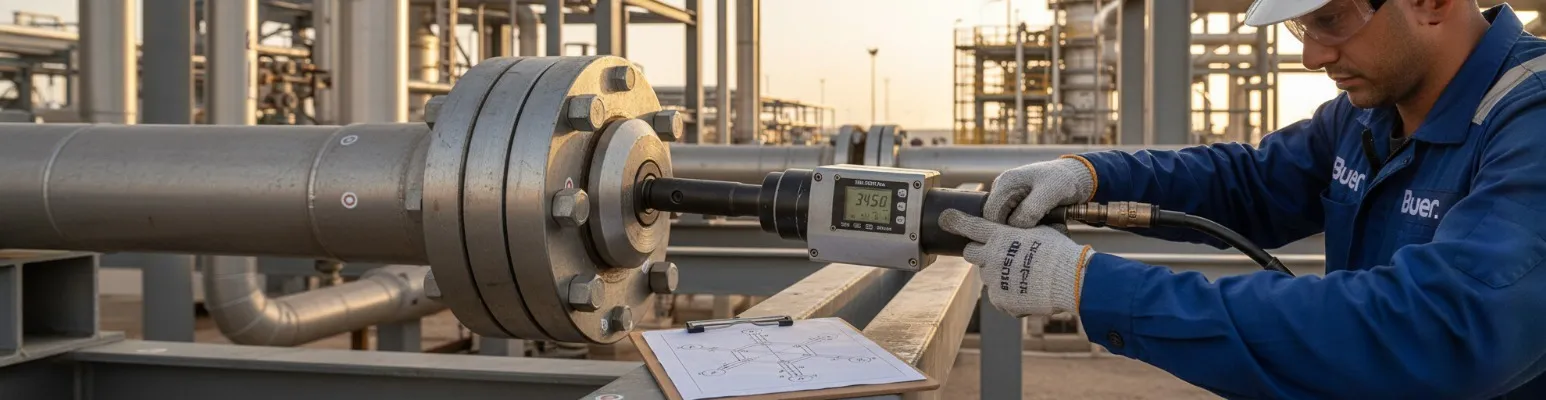
- Fit up the joint with the correct root gap and alignment.
- Weld and inspect.
Many modern machines combine cutting and beveling in a single setup. A split-frame cutter, for example, can sever the pipe and form the bevel in one pass. This saves time and reduces alignment errors, which is especially valuable for in-situ repairs on live or fixed lines.
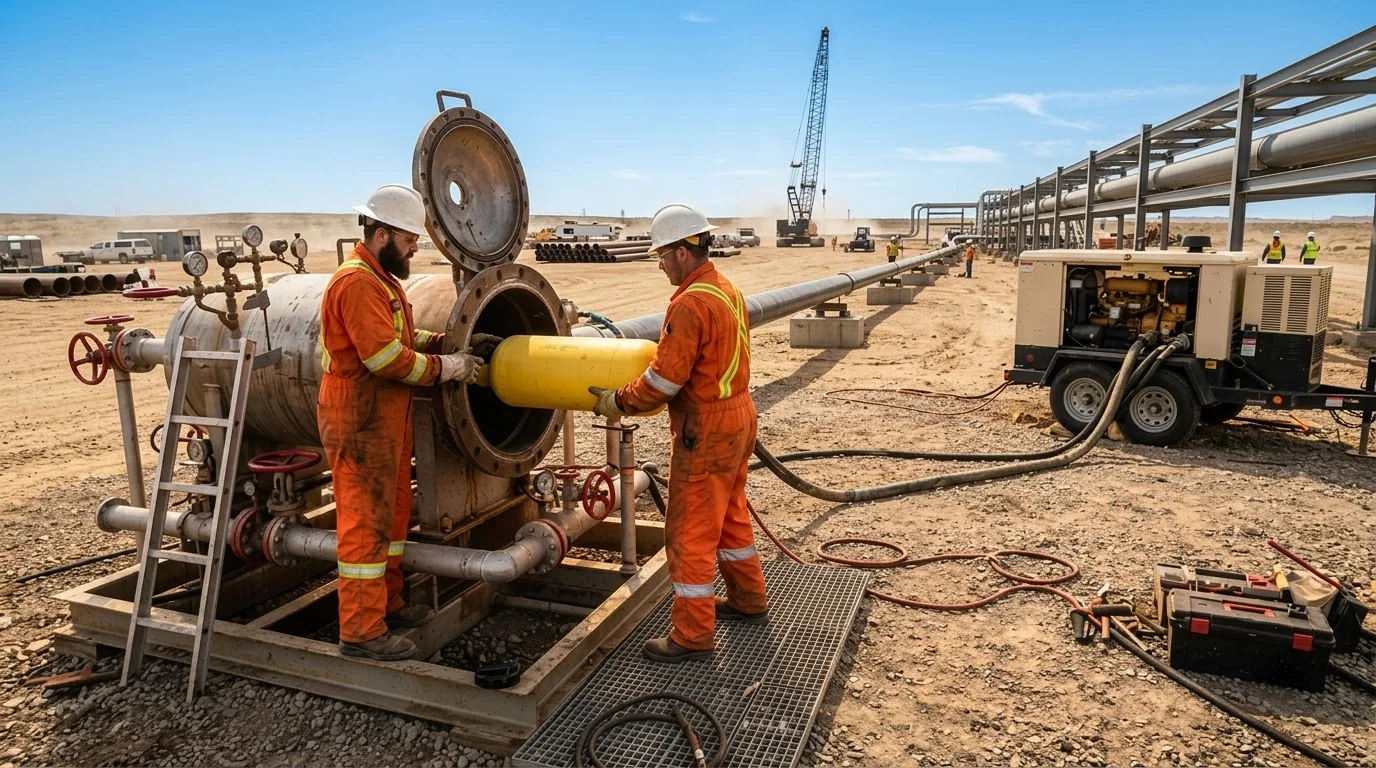
Preparation matters too. Internal buildup, scale, or residue can interfere with fit-up and contaminate welds. That is why many projects schedule cleaning before any cutting begins, and hydro jetting services are often used to flush out deposits so the pipe is ready for machining and inspection.
When Do You Need Only Cutting?
You may not need beveling when:
- The joint will use mechanical couplings, flanges with threaded connections, or grooved fittings
- The pipe is being removed or scrapped
- You are making a straight cut for a sleeve repair or a temporary bypass
- Wall thickness is very thin and a square butt weld is acceptable under the governing code
When Is Beveling Essential?
Beveling becomes essential when:
- Welding pipe with wall thickness above roughly 3 mm (1/8 inch), where full penetration is required
- Working to codes such as ASME B31.3 or B31.4, or to API 1104 for pipelines
- Joining pipe to butt-weld fittings, such as elbows, tees, and reducers
- Making high-pressure, high-temperature, or critical-service welds
- Repairing or replacing a section of an existing line
Why Precision Matters
Poor cutting and beveling are among the most common root causes of weld defects. Typical problems include:
- Incomplete fusion or penetration from incorrect bevel angle or land size
- Misalignment (high-low) from out-of-square cuts
- Excess weld metal consumption when bevels are too wide
- Heat-affected zone damage from uncontrolled thermal beveling
- Contamination from slag, oxide layers, or grinding residue
Each of these can lead to rejected welds on radiographic or ultrasonic testing, forcing cutouts and rewelds that burn schedule and budget. In high-consequence systems, a hidden defect can become a leak or failure later.
Safety Considerations
Hot work introduces fire and explosion risks in live plants, tank farms, and refineries. Where flammable vapors might be present, cold processes are often the safer choice. Specialist cold cutting services use spark-free, low-heat tools that allow cutting and beveling without a hot work permit in many cases, which also reduces downtime. Whatever the method, crews should follow lockout, gas testing, confined space, and PPE procedures appropriate to the site.
Choosing the Right Approach
When deciding how to cut and bevel, consider:
- Material: Carbon steel, stainless steel, duplex, and alloy pipes respond differently to heat and tooling.
- Diameter and wall thickness: Larger, heavier pipes often need orbital or split-frame machines.
- Location: In-plant, offshore, trench, or workshop conditions all affect tool choice.
- Hazard classification: Flammable atmospheres favor non-sparking, cold methods.
- Code requirements: Always confirm bevel specifications in the welding procedure specification (WPS).
- Schedule: Combined cut-and-bevel machines can shorten critical-path work.
Frequently Asked Questions
Is beveling the same as chamfering?
They are similar, but a chamfer is usually a small edge break for safety or appearance, while a weld bevel is a specified, engineered angle intended to accommodate weld metal.
Can I bevel pipe with a grinder?
Yes, for small or non-critical jobs. For code-governed welds, a machine bevel is more consistent and easier to inspect.
Does every welded pipe joint need a bevel?
Most butt welds on thicker pipe do. Very thin-walled pipe and some socket-weld or fillet-weld connections do not.
Conclusion
Pipe cutting and pipe beveling are closely linked but fundamentally different. Cutting defines the size and separation of the pipe; beveling shapes the end so it can be welded into a strong, fully fused joint. Treating them as distinct steps, each with its own tolerances and quality checks, leads to cleaner welds, safer work, and fewer surprises during inspection.
If your project involves cutting, beveling, cleaning, or repairs on industrial lines, working with an experienced pipeline services company ensures the right tools, methods, and safety practices are matched to your site and specifications. Plan both steps early, confirm requirements against the governing code, and your welds will start from the best possible foundation.